

Why You Must Be Careful with 8171 SMS or Email Messages
In Pakistan, the 8171 SMS or email system is a genuine communication method used by the Benazir Income Support Programme (BISP) and Ehsaas Program to inform beneficiaries about eligibility, payments, and updates. However, as awareness of this service has grown, so have fake messages and scams pretending to be from the same number.
Fraudsters now send fake messages claiming you’ve won money, qualified for a new payment, or need to “update” your CNIC details. Many innocent people fall victim to these tricks especially women and elderly citizens who are not familiar with digital fraud. The scammers’ main goal is to steal your personal information, CNIC number, or even your cash through deceptive means.
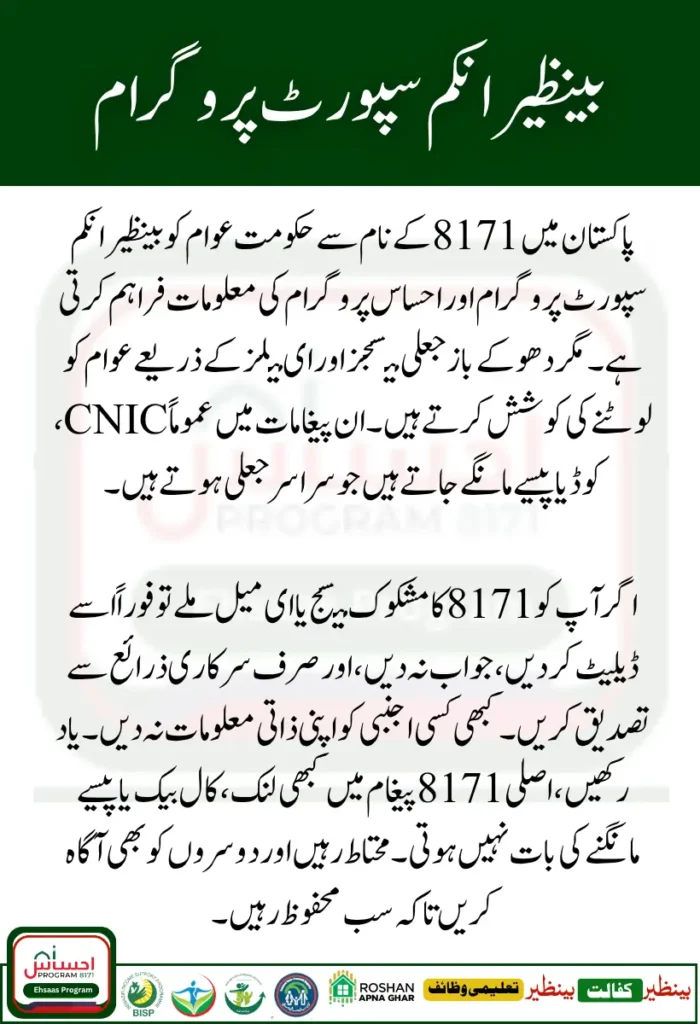
Understanding How Real 8171 Messages Work
Before we learn how to detect fake messages, let’s first understand how the real 8171 SMS or email system works. The government of Pakistan uses the number 8171 to communicate only official messages related to BISP and Ehsaas programs.
When you register for financial assistance, your CNIC is entered into the national database. Once verified, you receive an official message from 8171 telling you if you are eligible, your payment date, or your nearest collection center. The real message is short, direct, and never asks for personal data.
Here are some points to remember about authentic messages:
- Official 8171 messages only inform, they don’t ask for details.
- They are written in simple Urdu, usually mentioning BISP or Ehsaas by name.
- The sender ID will always be “8171”, not a random mobile number.
- They never include links or ask you to click on a website.
If any message or email claims to be from 8171 but asks you to send money, call back, or share your CNIC photo, that is a clear sign of fraud.
You Can Also Read : BISP 8171 NADRA Biometric Payment November 2025
Common Types of 8171 Scams in Pakistan
Fake 8171 SMS or email scams are becoming increasingly creative. Scammers use emotional and financial pressure to make people act quickly. Let’s look at some common examples so you can identify them easily.
| Type of Scam | How It Works | Warning Sign |
| Fake Payment Messages | You get a message saying “You have won Rs. 25,000 from 8171.” | Real messages never announce “winnings.” |
| CNIC Update Request | Fraudsters ask you to “reconfirm” your CNIC or photo ID. | Government never asks this via SMS. |
| Clickable Link | A message includes a link to “verify” your payment online. | 8171 messages don’t contain links. |
| Call Back Number | Message says “call this number to get your payment.” | 8171 never sends private numbers. |
| Fake Email Notice | An email claims you have to fill a form to get funds. | BISP doesn’t use personal email for payments. |
By understanding these patterns, you can immediately stop yourself or your family from falling into traps.
Steps to Verify If an 8171 SMS or Email Is Real
If you ever receive an 8171 SMS or email, don’t panic or rush to respond. Instead, follow these steps to confirm if it’s genuine or fake.
1. Check the Sender ID Carefully
The only official number used by the government is 8171. If you receive a message from any other number, such as “0301” or “0324”, it’s a fake one.
2. Read the Message Tone
Official 8171 SMS or email messages are polite, short, and clear. They never threaten or create urgency. Fake ones often say things like “Reply immediately or your payment will be canceled.”
3. Look for Spelling and Grammar Errors
Fake messages often contain poor Urdu or English grammar, spelling mistakes, or odd spacing. Government messages are written properly.
4. Never Click on Any Links
If the message includes a link, never click it. These links can steal your personal data or install spyware on your phone.
5. Confirm Through the Official Helpline
If you’re unsure, call the official BISP helpline. The representatives can verify if any message you received is authentic.
How to Stay Safe from Fake 8171 Emails
In recent years, scammers have started using fake 8171 emails as well. They may attach documents or forms that look official but are actually traps designed to steal your data.
Here are some red flags to watch for:
- The sender’s email ends with @gmail.com or @yahoo.com not a government domain.
- The email asks you to fill out a form or provide personal information.
- The message includes an attached file or zip folder.
- You are told to reply immediately to claim your funds.
To protect yourself, never open attachments from unknown senders. The BISP and Ehsaas programs do not communicate through email for payment collection. They rely only on official messages and government offices.
What To Do If You Receive a Suspicious 8171 Message
If you ever receive a suspicious 8171 SMS or email, the most important thing is not to reply. Instead, take these steps to handle the situation safely:
- Ignore and Delete It: Don’t engage or respond to the sender.
- Block the Number or Email: Prevent further messages from the same source.
- Report It: Share details with your nearest BISP office or helpline.
- Educate Others: Inform your family and neighbors so they don’t fall victim to the same scam.
If you have already shared your personal information, immediately contact your nearest NADRA or BISP office to secure your record and prevent misuse.
You Can Also Read : BISP Kafalat Payment Increased to Rs 14500 from November 2025
Why Scammers Target the 8171 System
Scammers target the 8171 SMS or email system because it’s a trusted government channel used by millions of Pakistanis. Most beneficiaries are from low-income backgrounds, which makes them easier targets for manipulation.
Fraudsters know that when people hear about “money” or “payment,” they act quickly without verifying. They take advantage of this emotional response. Some even create fake call centers pretending to be from BISP, tricking people into revealing their CNIC and mobile numbers.
The best defense is awareness. When you understand how these scams work, you protect yourself and your community. The government alone cannot stop them citizens must stay alert and informed.
How to Help Others Stay Safe
Awareness spreads safety. Once you learn how to avoid scams when you get 8171 SMS or email, it’s your responsibility to share this knowledge with others especially in villages or among people who use basic phones.
Here are a few simple ways you can help:
- Teach your family that only messages from 8171 are official.
- Show your elders how to identify fake numbers.
- Explain that no one should share CNIC or PIN codes with anyone.
- Encourage others to visit official offices for confirmation.
By spreading this awareness, you help reduce scams across Pakistan and make the system safer for everyone.
Official Information Channels
While we are not including any external links, here’s a list of safe and official methods you can use to verify information about your payments or eligibility.
| Method | How It Helps |
| BISP Helpline | Call the official number to confirm any message. |
| 8171 SMS Check | Send your CNIC to 8171 to verify your eligibility. |
| Visit BISP Office | Confirm details in person for peace of mind. |
| Local Notice Boards | Check for official updates in your district. |
These are the only trustworthy ways to check your payment details. Never use third-party websites or agents claiming to “speed up” your payment.
Conclusion
Staying safe from scams is your right and your responsibility. When you receive any 8171 SMS or email, always pause, verify, and think before responding. The real government message will never ask for money, CNIC pictures, or links to click. Remember awareness is your strongest shield.
Keep your family informed and protect others in your community by spreading this message. The more people understand these frauds, the fewer victims scammers can trap. Stay alert, stay informed, and only trust official sources for 8171-related information
FAQs
How can I tell if my 8171 SMS is real or fake?
If the message only informs you of eligibility or payment, it’s real. If it asks for personal details or links, it’s fake.
Can scammers send messages that look like they are from 8171?
Yes, they can use similar numbers, but the tone, spelling, and extra details usually give them away. Always confirm before acting.
What should I do if I gave my CNIC to a fake 8171 message?
Immediately report it to the BISP helpline and NADRA office to secure your record and prevent misuse.
Does the government ever send emails for BISP or Ehsaas payments?
No, all official communication happens through the 8171 SMS service or registered offices never through personal email.
Disclaimer
⚠️ Disclaimer: This article is for informational purposes only. We are not affiliated with any government agency. For official updates, visit the official BISP website.
Note: This content is based on publicly available information. We are not affiliated with BISP or any government body. Read full disclaimer here.